Web design for counsellors

Web design for counsellors: calm websites that help the right clients find you

Most people look for a counsellor quietly, on their phone, before they tell anyone. A calm, clear website with solid local SEO is what helps them find you and feel safe enough to make that first contact. This is counselling website design built around how people actually reach out.

No obligation · same-day reply

What I build

What good counselling practice web design needs to deliver

Many counselling websites are dated, slow to load, and hard to find for the searches that matter, the ones people make when they are struggling. People research quietly before they reach out, and the practice with the calmest, clearest, best-ranked site is the one they feel safe contacting. Here is what I put in place for every counsellor I work with.

Why it matters

Counselling web design starts with showing up on Google

When someone decides they need support, the first thing they usually do is search, often late at night and often privately. They go straight to Google, and increasingly to your own site, before they ever pick up the phone.

Someone looking for help is rarely shopping around in the usual sense. They are nervous, and they are looking for a person who feels right and an approach they can trust. The practice that appears clearly in those results, with recognised accreditation, a warm explanation of how they work, and a site that loads fast on a phone, is the one that gets the enquiry. A site that is hard to find, or that feels cold and clinical, quietly loses that person before a word is exchanged.

Web design for counsellors is not the same as a generic business website. A counselling practice has to answer several different search intents at once: people searching by their specific issue, like anxiety or bereavement, and people searching by format, like online or phone sessions. A site built around those distinct needs performs very differently to one recycled from a template library.

I build calm, clean counselling websites from scratch, never WordPress, never a template recycled from another industry. Everything is yours to own outright: no monthly platform fees, no lock-in, no developer needed for standard changes.

No obligation · same-day reply

Talk to me about your practice

Tell me a little about your practice and what your site needs to do. I'll come back with honest advice and a clear quote, no obligation.

Goes straight to my inbox. I read everything and reply usually within a few hours.

Web design for Irish counsellors: what actually moves the needle

A counselling website has to do something most generic business sites never face: meet someone at a vulnerable moment and make them feel safe enough to take a step they have been putting off. The person reading your site might have been thinking about getting help for months. What your site can do, gently, is show them that the right support exists, that you understand what they are going through, and that getting in touch is simpler and less daunting than they feared.

The practices that the right clients find online are not always the largest or longest-established. They are the ones with the fastest-loading sites, the clearest local positioning, and pages that speak directly to the issues people actually search for. Web design for counsellors, done properly, is as much about warmth, credibility and a low-friction first contact as it is about how the site looks.
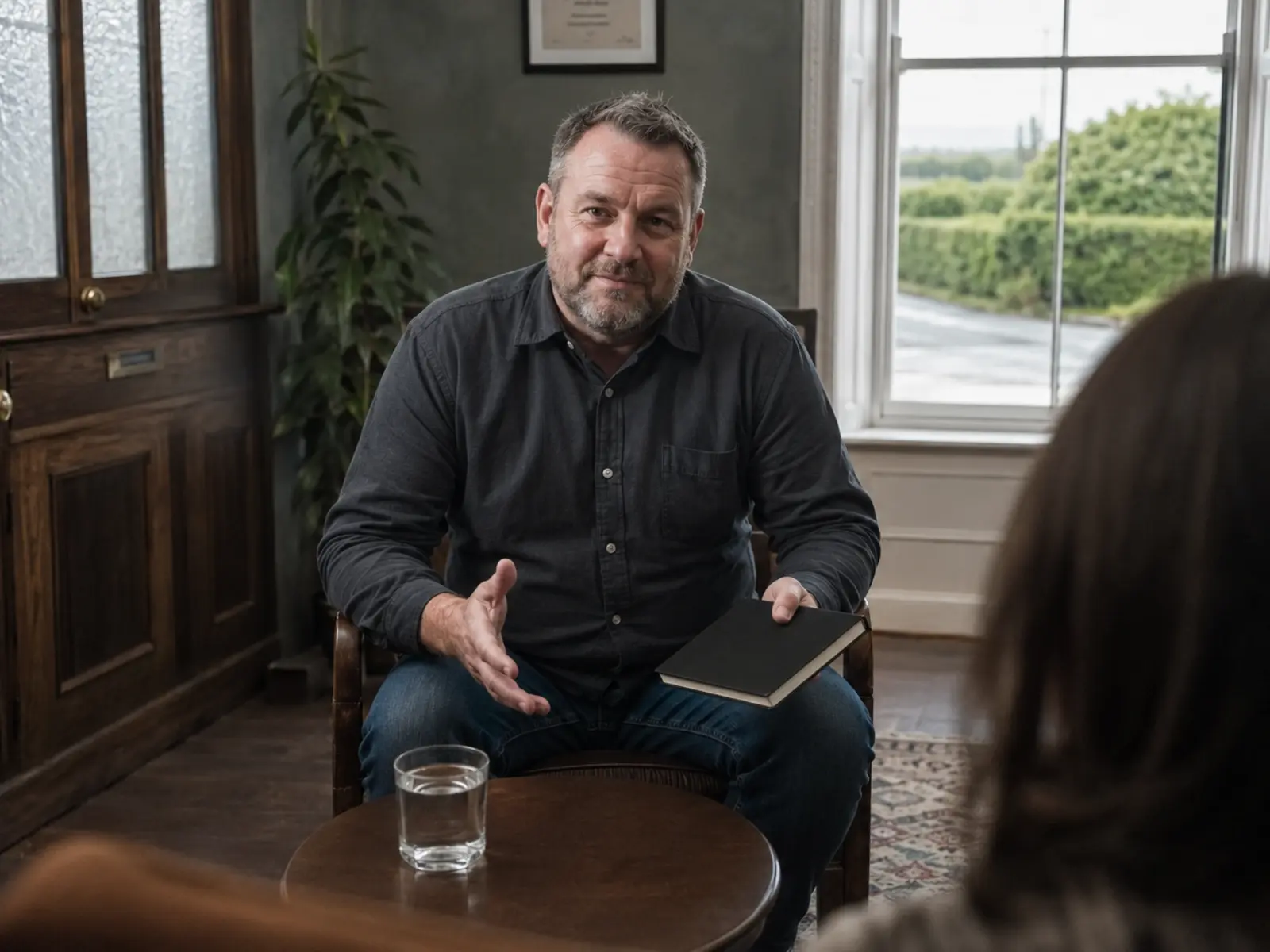
A counsellor and client in a calm, private session room

Local SEO for counselling websites: how it works

Ranking locally for counselling and therapy searches comes down to three interconnected things: a fast, well-structured website with pages targeting the right queries for your area; a Google Business Profile correctly set up and actively maintained; and a steady flow of genuine reviews where clients feel comfortable leaving them. Those signals largely determine who appears in the map pack when someone nearby searches for a counsellor.

The pages that matter most are not just the homepage. A dedicated page for each issue you work with and each area you cover gives Google more to rank and gives people clearer answers. "Counsellor in Galway" and "anxiety counselling Kildare" are different searches that deserve different pages. I have written a plain guide to how local ranking works that covers exactly what factors move a practice up the results.

Issue-specific pages on your counselling website

The highest-intent counselling searches are the specific ones. People rarely search for "a counsellor" in the abstract. They search for what they are living with: "anxiety counselling", "bereavement counselling", "couples counselling", "stress and burnout". Someone searching those terms has found the words for what they are feeling, and they are looking for someone who works with exactly that. A page for each issue you specialise in lets them recognise themselves and feel understood before they have said a thing.

Most counselling sites try to cover anxiety, depression, bereavement and loss, trauma, relationship counselling and addiction all on a single crowded page, which ranks for none of them well and speaks clearly to no one. Giving each issue its own calm, honest page is one of the clearest gaps in Irish counselling website design, and the part that most directly connects the right person to the right support, with no claim to cure, just clarity about how you can help.

Web design for multi-therapist practices

A practice with several counsellors needs a site structured so each therapist is found by the people they can help most. A profile page for each person, with their accreditation, their areas of focus and their availability, ranks each therapist in their own right instead of hiding everyone behind one shared page. People often want to choose who they speak to, and clear profiles help them find someone who fits.

There is a practical benefit beyond search, too. Clear therapist and issue pages help someone reach the right person first time, so a couple looking for relationship counselling and a person dealing with bereavement each land with the counsellor who works in that area. Web design for multi-therapist practices is about making the site mirror how the practice actually works, routing each enquiry to the right person, not just listing names in a row.

Confidential enquiry, online sessions and booking on your counselling website

For many people, the hardest part is the first message. Your site can make that step feel safe with a confidential enquiry form, clear and honest notes on what happens after they get in touch, and the option of a simple booking step if you prefer it. Many counsellors now offer a mix of in person, online and phone sessions, and your site can explain each clearly, alongside fees and what a first session is like, so there are fewer unknowns holding someone back.

The right setup depends on how you work. If you take referrals through an EAP, run a waiting list, or prefer a quiet email enquiry over an online calendar, the site can reflect that. The aim is to reduce the hesitation people feel before reaching out, not to add pressure, and to keep the whole experience as private and gentle as the conversation it leads to. I will advise on what fits your practice before anything is built, not after.

Counselling websites built from scratch, not templates

WordPress is slow, plugin-dependent, and a recurring security liability. A great many counselling websites in Ireland run on it, often on the same handful of therapist themes, which means they share the same performance floor and the same look. A site built from scratch in clean, modern code loads faster, scores higher on Google's Core Web Vitals, and feels calmer and more distinct than every other practice on the same template.

Every site I build is yours to own outright: no monthly platform fee, no lock-in, no developer required for standard content changes like updating your fees, adding a new issue page, or publishing a reflective post. The same model applies whether I am building web design for a sole practitioner or a larger multi-therapist practice. Fixed price, clear timeline, you own everything at the end.

The opportunity

The right client is already searching. Your site helps them find you.

Competition for local issue-specific counselling searches is thinner than you might think. A fast, calm, properly structured site with the right issue and area pages will reach the people who need you sooner, not years from now.

Start the conversation
A counsellor in their practice room

Common questions

Web design for counsellors: questions answered

Do counsellors and psychotherapists really need their own website?

Most people looking for a counsellor start on Google, often quietly and on their phone, before they tell anyone they are searching. Directories like the IACP or IAHIP listings help, but they show you alongside everyone else. Your own site is where someone decides whether you feel like the right person to talk to. It is where they read about your approach, see your accreditation, and find out what a first session is like. A calm, clear website lowers the hesitation people feel before reaching out.

Can you add online and phone session info and a confidential enquiry or booking option?

Yes. Many counsellors now offer a mix of in person, online and phone sessions, and your site can explain each clearly so people know what to expect. I can add a confidential enquiry form, or a simple booking option if you prefer, designed to feel private and low pressure. The goal is to make that first contact as gentle as possible, with clear notes on confidentiality so people feel safe getting in touch.

We are a multi-therapist practice. Can the site handle that?

Yes. A counselling practice with several therapists works well with a profile page for each person, their accreditation, their areas of focus and their availability. People often want to choose who they speak to, and a clear set of profiles helps them find someone who fits. Enquiries can route to the right therapist or to a central contact, whichever suits how your practice runs.

Can the site reflect the specific issues I work with?

Yes, and it is one of the most useful things a counselling website can do. People usually search by what they are going through: anxiety, depression, stress, bereavement and loss, trauma, relationship or couples counselling, addiction. A dedicated page for each issue you specialise in lets someone find the words for what they are feeling and see that you work with exactly that. It is gentler and more honest than a single page trying to cover everything at once.

What will a counselling website cost?

It depends on what the site needs to do, the number of pages, whether you are a sole practitioner or a multi-therapist practice, and whether you want confidential booking. Every project starts with a free, no pressure consultation and ends with a fixed quote, not an hourly rate. You know the full cost before I start, and it does not change.

How long does a counselling website take to build?

A focused website for a sole practitioner, home, about, your approach, a few issue pages and a confidential contact, usually takes around three to four weeks from brief to live. A larger practice site with several therapist profiles and online booking, allow five to six weeks. You will get a fixed price and a clear timeline before any work starts.

How do you handle confidentiality and sensitive content on the site?

Carefully. Enquiry forms are set up to protect the information people share, and I will advise on clear, honest wording around confidentiality and what happens after someone gets in touch. The whole site is written to feel calm and non-judgemental, never clinical or salesy. I will also keep things simple around tracking and analytics so that visiting your site feels as private as the conversation that follows.

Counselling web design that helps the right clients find you

Calm, built from scratch, ranked for the issue and area searches that bring the right people to your door. Fixed price, you own everything, no monthly lock-in.

Call Dave — 083 140 6725
Call Dave