Web design for architects

Web design for architects: Irish practices built to win commissions

Referrals open the door, but your architecture website is what convinces the client to commit. When a homeowner is choosing a practice for an extension or a one-off home, they research your past projects first, and a fast site with a strong portfolio and solid local SEO is what turns that search into an enquiry.

No obligation · same-day reply

What I build

What good architecture practice web design needs to deliver

Most practice websites are outdated, slow to load with large project images, and hard to find for the searches that actually matter, the ones from homeowners and developers planning a project. Clients research before they enquire, and the practice with the fastest, most credible, best-ranked site gets the call. Here is what I put in place for every architect I work with.

Why it matters

Architect web design starts with showing up on Google

The Irish construction and renovation market moves fast, and so do the people in it. Homeowners, developers and self-builders all go straight to Google, and then to your own site, before they ever ring the practice.

When someone is planning an extension, a one-off home or an attic conversion, the first thing they do is look up the architects in their area and study the work. The practice that appears at the top of those results, with a clear portfolio of relevant projects, real local knowledge, and a site that loads fast on a phone, gets shortlisted. The ones that don't show up, or whose portfolio takes seconds to appear, quietly lose the commission before a word is spoken.

Web design for architects is not the same as a generic business website. It has to handle several search intents at once: a homeowner pricing a house extension, a self-builder researching a one-off rural home, a developer seeking a practice for a commercial scheme, and an owner needing conservation or retrofit and SEAI grant work. A site built around those distinct needs performs very differently to one recycled from a template library.

I build fast, clean practice websites from scratch, never WordPress, never a template recycled from another industry. Everything is yours to own outright: no monthly platform fees, no lock-in, no developer needed for standard changes.

No obligation · same-day reply

Talk to me about your practice

Tell me a little about your practice and what your site needs to do. I'll come back with honest advice and a clear quote, no obligation.

Goes straight to my inbox. I read everything and reply usually within a few hours.

Web design for Irish architecture practices: what actually moves the needle

An architecture practice's website has to do something most generic business sites never face: carry the weight of your work visually, and prove your suitability for a specific kind of project before the client ever calls. Nobody instructs a practice off a paragraph of text. They instruct off the projects, the photographs of finished homes and buildings that look like the thing they want built. Your portfolio is the single most important conversion asset you have, and the site has to do it justice.

The practices winning commissions online are not always the biggest or longest-established. They are the ones with the fastest-loading portfolios, the clearest local positioning, and the right pages targeting the projects they actually want. Web design for architects, done properly, is as much about image handling, credibility and enquiry capture as it is about how the site looks.
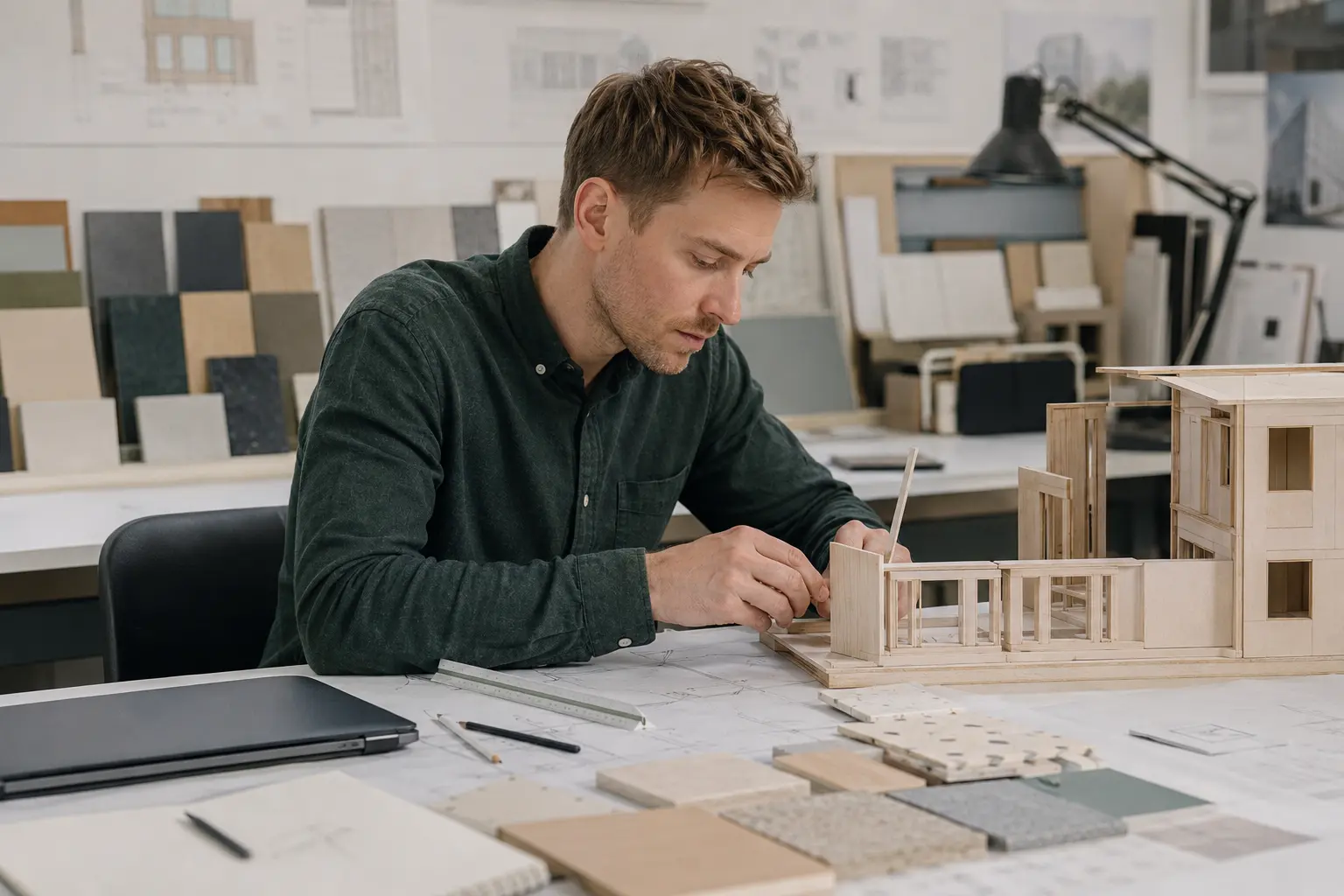
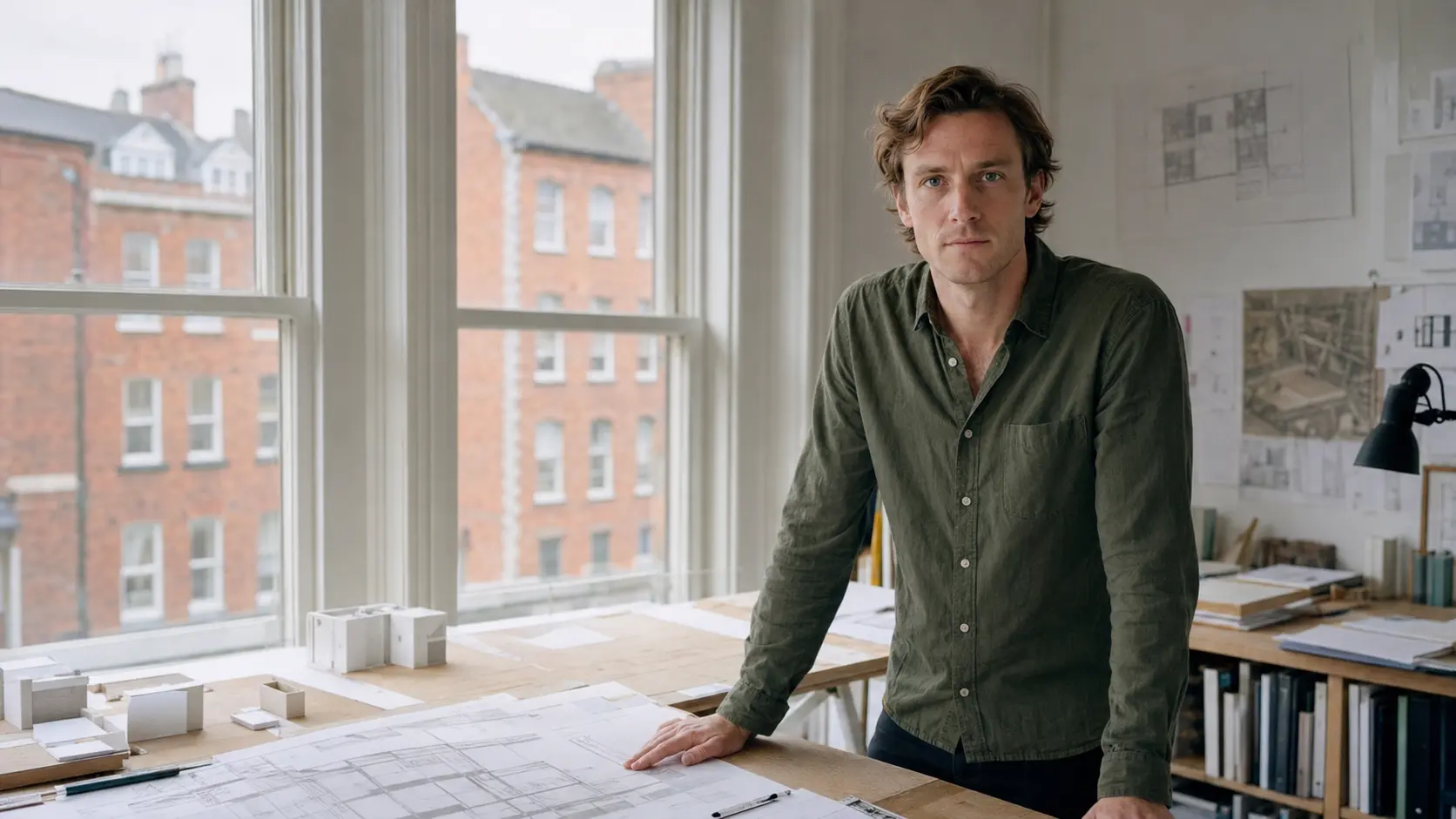
An architect reviewing drawings for a house extension with a client at a studio table

Local SEO for architect websites: how it actually works

Ranking locally for practice searches comes down to three interconnected things: a fast, well-structured website with pages targeting the right queries for your area; a Google Business Profile correctly set up and actively maintained for each office; and a steady flow of genuine client reviews. Those three signals largely determine who appears in the map pack when a homeowner nearby searches for an architect.

The pages that matter most are not just the homepage. A dedicated page for each project type and each area you cover gives Google more to rank and gives clients clearer answers. "House extension architect Galway" and "one-off home design Mayo" are different searches that deserve different pages. I've written a plain guide to how local ranking works that covers exactly what factors move a practice up the results.

Project portfolio pages that win architecture commissions

Your portfolio is the special case in architecture web design, and the part most practices get wrong. A dedicated page per project, titled and structured for the search a future client would actually type, "attic conversion architect Cork", "rural house design Kerry", does two jobs at once. It ranks for that specific project type in that specific area, and it shows the prospect a finished example of exactly what they are planning, which is what closes the enquiry.

The catch is that this only works if the images load fast. Architecture portfolios are heavy with large, high-resolution photographs, and a gallery that stutters or takes seconds to appear undoes the very impression it was meant to create. I build project pages that serve sharp, optimised imagery and score well on Core Web Vitals, so a visual portfolio that ranks also converts. A portfolio that ranks but loads slowly is a commission lost in the time it takes to scroll.

Web design for multi-discipline and multi-office practices

A practice with several offices, or one spanning residential, commercial and conservation work, needs a site structured so each discipline and each office is found by the right audience. A page per discipline, with the right examples and language, ranks each strand in its own searches instead of blurring into a single generic services page. A page per office, with the correct address, team and contact details, ranks each location in its own catchment instead of competing with itself.

There is a practical benefit beyond search, too. Clear discipline and office pages stop a developer landing on residential content, or a homeowner ringing the wrong location. Web design for multi-office practices is about making the site work as a functional tool that routes the right enquiry to the right team, not just an online brochure of finished work.

Showcasing projects and capturing enquiries on your architecture website

A portfolio that impresses but never asks for the enquiry is a missed opportunity. The right approach pairs each project with a clear, well-placed enquiry form, so a homeowner who has just seen an extension exactly like the one they want can ask about theirs in a single step. The point is to capture the lead while your work is still on screen and the motivation is highest, not to send them hunting for a contact page.

If you'd prefer something simpler, a featured-projects section you update yourself and a straightforward enquiry form, I can build that instead. The point is to match the site to how your practice actually works, capturing the projects that matter without adding admin. I'll advise on what fits your setup before anything is built, not after.

Architecture websites built from scratch, not templates

WordPress is slow, plugin-dependent, and a recurring security liability. The majority of architecture websites in Ireland run on it, often on the same handful of portfolio themes, which means they share the same performance floor and the same look, and that performance floor is exactly where image-heavy portfolios suffer most. A site built from scratch in clean, modern code loads faster, scores higher on Google's Core Web Vitals, and stands apart from every other practice on the same template.

Every site I build is yours to own outright: no monthly platform fee, no lock-in, no developer required for standard content changes like adding a new project, updating your team, or adding an office. The same model applies whether I'm building web design for a single-architect studio or a multi-discipline practice. Fixed price, clear timeline, you own everything at the end.

The opportunity

Your best work deserves a site that loads as fast as it looks.

Competition for local project searches is thinner than you might think. A fast, properly structured site with the right portfolio and project pages will outrank most existing practices within months, not years.

Start the conversation
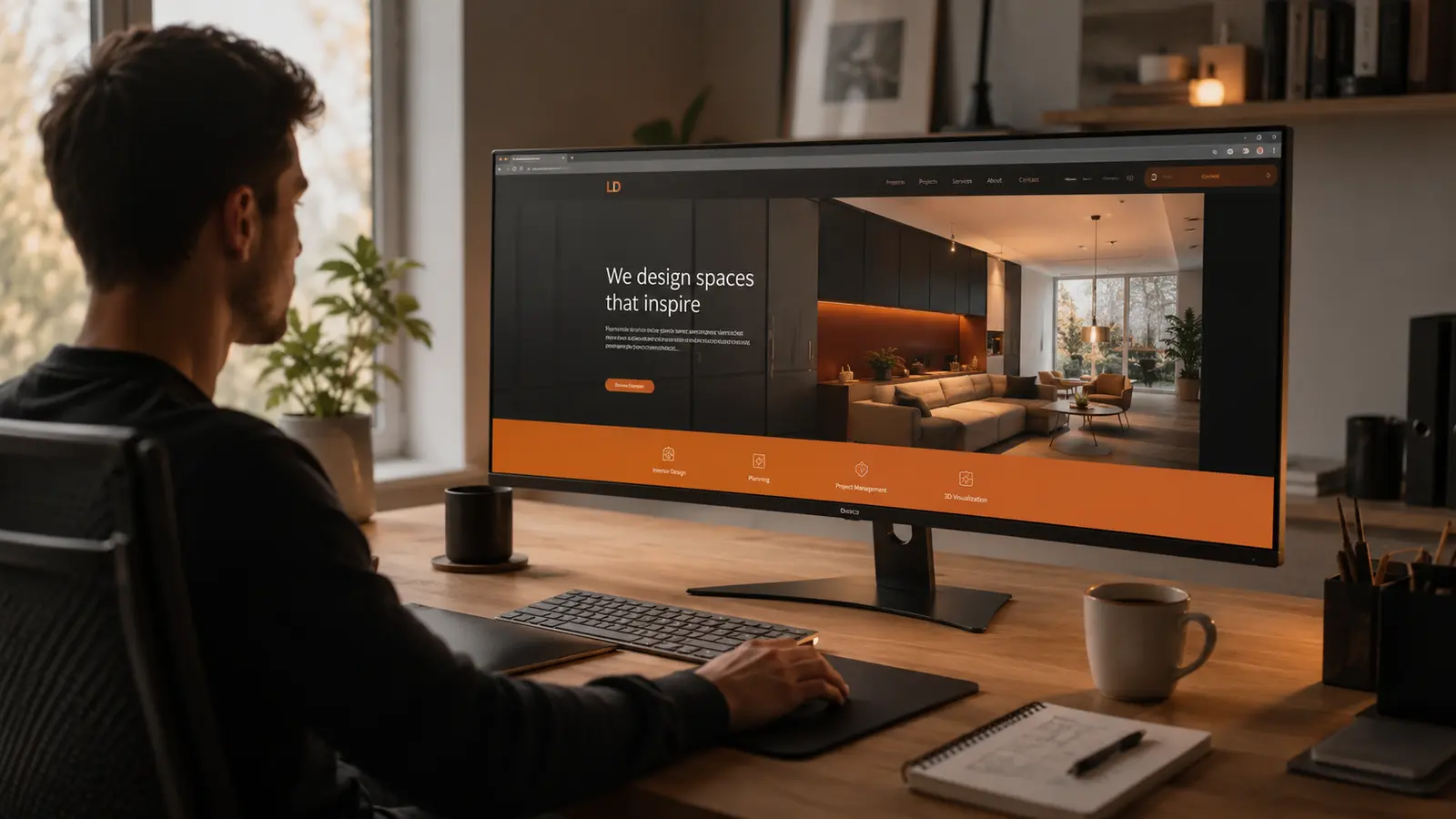
An architect in their studio

Common questions

Web design for architects: questions answered

Do architects need a website when most work comes from referrals?

Yes, and the two reinforce each other. A referral does not skip the website, it sends people to it. When a friend recommends you, the homeowner still searches your name, looks at your past projects, and decides whether your work suits theirs before they ring. A slow or dated site, or no real portfolio, plants doubt at exactly the wrong moment. Referrals open the door, but your architecture website is what convinces the client to walk through it.

Can you build a project portfolio or gallery that loads fast?

Yes, and it's the part that matters most for an architecture practice. Architecture sells on imagery, so the site has to handle large, high-quality photographs without becoming sluggish. I optimise every image, serve modern formats, and build to score well on Google's Core Web Vitals, so your portfolio loads sharp and instant on a phone. A gallery that stutters or takes seconds to appear loses the very client your best project was meant to win.

We work across a few disciplines and offices. Can the site handle that?

Absolutely. A multi-discipline or multi-office practice works well with a clear structure: a page per discipline, residential, commercial, conservation, and a page per office, each optimised for its own area and audience. Someone planning a house extension in Galway searches differently to a developer seeking a practice for a commercial scheme. Your site can rank for both, with the right team and contact details on each, so enquiries reach the right people.

We specialise in extensions, one-off homes or conservation. Does that change the build?

It shapes the whole site for the better. A specialism is a search advantage, not a limitation. If you focus on house extensions, one-off rural homes, attic conversions, retrofit and SEAI grant work, or conservation, I'll build dedicated pages that rank for those exact terms in your area. A homeowner researching an attic conversion in Cork is not searching the same way as someone planning a protected-structure renovation.

What will an architecture practice website cost?

It depends on what the site needs to do, the number of pages and disciplines, the size of the portfolio, and whether you need enquiry capture across several offices. Every project starts with a free consultation and ends with a fixed quote, not an hourly rate. You know the full cost before I start, and it doesn't change.

How long does an architecture website take to build?

A standard practice site, homepage, services, a project portfolio, about, and a project enquiry form, takes around three to four weeks from brief to live. A larger site with multiple disciplines, several offices and a deep portfolio of past work, allow five to six weeks. You'll get a fixed price and a clear timeline before any work starts.

Can people enquire about a new project directly from the site?

Yes, and it's where a well-built architecture website earns its keep. A clear project enquiry form, placed where homeowners and developers actually look, turns interest into a booked initial consultation while your work is still on screen. Capturing that enquiry before they contact two other practices is the difference between a portfolio that admires and a portfolio that wins commissions.

Architect web design that wins better commissions

Fast, built from scratch, with a portfolio that ranks for the project searches that bring in enquiries. Fixed price, you own everything, no monthly lock-in.

Call Dave — 083 140 6725
Call Dave